Saturday, May 17, 2008


Cyprus 37
Cyprus 35

Cyprus 34

Cyprus 33

Cyprus 32

Cyprus 31
Cyprus

Cyprus 30

Cyprus 28

Cyprus 27

Cyprus 26

Cyprus 25

Cyprus 24 SOLD

Cyprus 23

Cyprus 22

Cyprus 21

Cyprus 20

Cyprus 19

Cyprus 18

Cyprus 17
Cyprus 16

Cyprus 15

Cyprus 13

Cyprus 12

Cyprus 11

Cyprus 10

Cyprus 9

Cyprus 8

Cyprus 7

Cyprus 6

Cyprus 4

Cyprus 3

Cyprus 2

Cyprus 1

Thursday, December 27, 2007


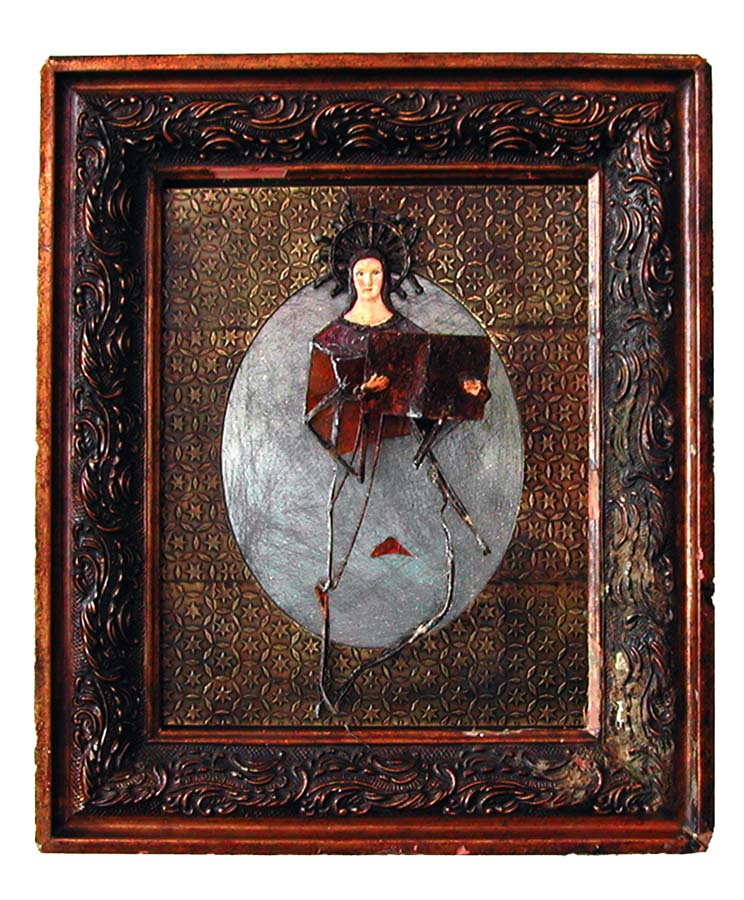
Reliquary: Images of the Sacred

"Sacred Heart" from the Reliquary series. To see more pieces in this series please follow this link: http://gordonmixedmedia.blogspot.com

Monday, October 01, 2007

Lori Gordon is a mixed media artist and writer on the arts who grew up in the Northern Plains. She began moving west and south as a teen, spending years in the Black Hills of South Dakota and the high desert of Arizona. Along the way, she picked up a bachelor's degree in political science and a master's degree in religious studies, all the while pursuing her love of art. Largely self taught, Gordon works in many medias including graphite, acrylic, handmade paper, fabric and polymer clay. Her work may be found in galleries along the Gulf Coast, in museums in South Dakota, and in public and private collections around the country. Recently, one of her pieces was acquired by the Smithsonian Institution for inclusion into their permanent collection.

In 2003 Gordon began capturing the local landscapes of her beloved Mississippi Gulf Coast in acrylic, and continued that work until Hurricane Katrina upended her life on August 29, 2005. With her home, studio and all of her supplies washed away by the 35 foot storm surge and 150 mile per hour winds which obliterated her community, Gordon returned to work using the only materials which were available to her. Five weeks after the event, Gordon began collecting rubble and transforming it into works of art.

“The Katrina Collection” is the name she has given to this new series of mixed media collages and assemblages. The series first garnered national attention when MSNBC.COM featured the work in their series “Rising From Ruin.” National Public Radio featured The Katrina Collection on their program "All Things Considered", and her work was also covered by the Associated Press. Since then, Gordon has exhibited The Katrina Collection in venues around the nation.

This blog features a sampling of work by Gordon. To see The Katrina Collection in its entirety, please go to http://thekatrinacollectionbylorikgordon.blogspot.com. To see a slideshow and listen to an interview with the artist, log on to http://risingfromruin.msnbc.com/ For the NPR interview, go to http://www.npr.org/templates/story/story.php?storyId=56205377.
To view a 20 minute film on Gordon's work, click on the arrow below.
To see her resume, scroll down to the bottom of the blog.

Film on the work of Lori K. Gordon


Sunday, April 30, 2006


Angel of St. Rose from The Katrina Collection by Lori K. Gordon

Heron FE Fe from The Katrina Collection.

Thursday, February 16, 2006


Monday, June 13, 2005

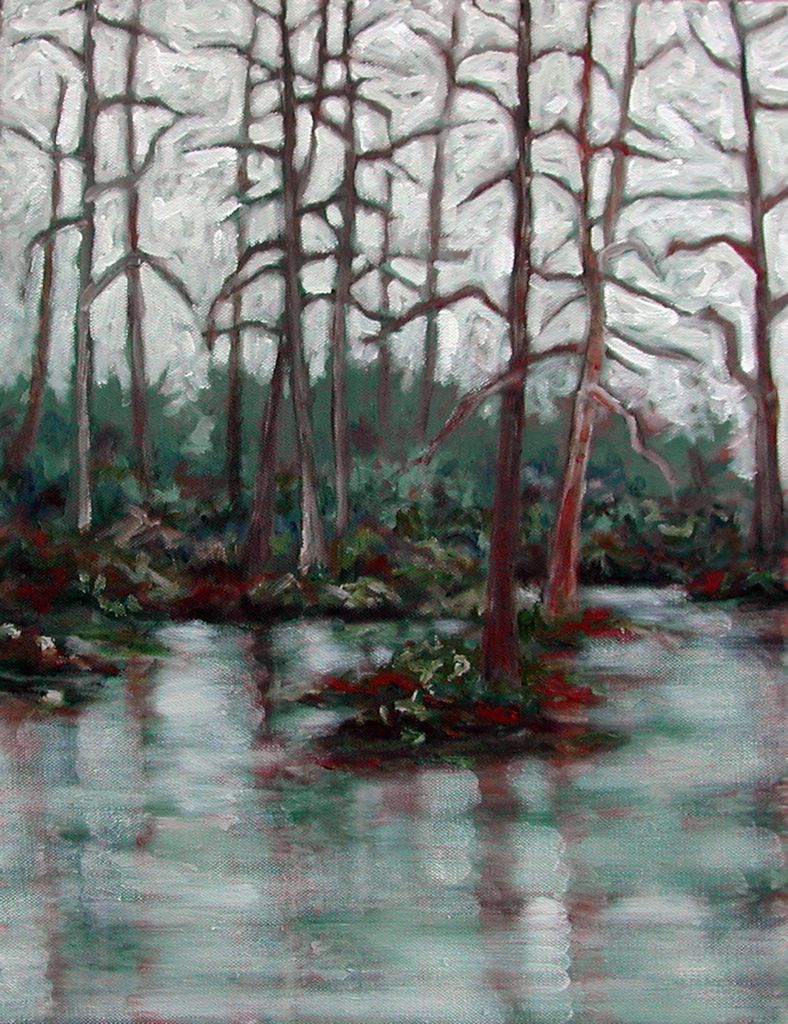
Trees in the Meadow Posted by Hello
Six Palms Posted by Hello
Lake Pontchartrain II Posted by Hello
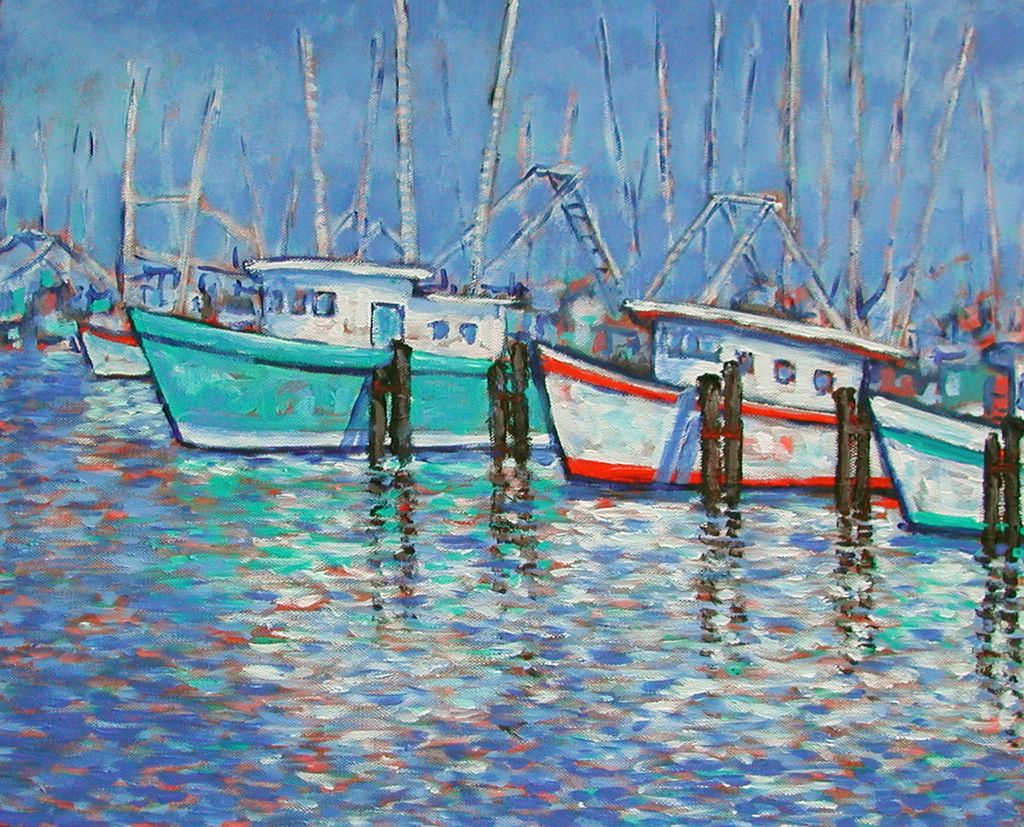
Shrimp Boats at Rest Posted by Hello
"Labat: A Creole Legacy" 7 1/2' by 9 1/2' fabric collage. Posted by Hello

Labat: A Creole Legacy

I am presently working on the second stage of a project which I began in 2001. In April of that year, I met Celestine Labat, a 102 year old resident of Bay St. Louis. This chance meeting was the beginning of a friendship which lasted until Celestine's death at the age of 2004, and was to have an incredible impact upon my life.

The first stage of the project was the creation of an art quilt which has been accepted into the permanent collection of the Smithsonian Institution. Following is an article written by Gene Coleman and published in the summer 2004 issue of Art Gulf Coast: A Quarterly Review of Arts Along the Gulf Coast.


Preserving A Legacy:
Artist Lori Gordon creates a quilt to tell one woman's life story.

By Gene Coleman.

While many people leave this world unsure of how they will be remembered, Celestine Labat passed away at the age of 104 knowing that her family history was preserved in a work of art. What she didn't know was that the artwork would find its way to the Smithsonian Institution.

At the age of 102, at a celebration the Hancock County Historical Society held in honor of her birthday, Labat (a native of Bay St. Louis, in Hancock County, Mississippi-) met the person who would create the artwork that would preserve her family's history.

Attending the ceremony that day was local artist Lori Gordon, who was charmed by Labat.

In 2001, the Hancock County Historical Society held a special ceremony to proclaim April 19, 2001 to be Celestine Labat Day. The Bay St. Louis native was honored for 101 years of residency in the city. It was at that ceremony that local artist Lori Gordon became enthralled by Labat's charm.

Gordon wanted to make Labat the subject of her artwork and had a friend arrange a meeting for her with Labat. Upon meeting Labat, Gordon found a relationship that exceeded her original artistic intentions.

"I called and asked her if we could get together for photos because I wanted to do drawings of her," Gordon said. "So I started visiting her on a regular basis, and she was a great storyteller, and she started telling me stories, and I knew that I had to preserve those stories."

Gordon was fascinated by Labat's stories of growing up as a woman of color in the Deep South in the early 1900s.

Taping their conversations, Gordon captured more than 30 hours of Labat's oral history. Labat also shared family photographs with Gordon. Labat: A Creole Legacy incorporates roughly 250 of those photographs and 29 transcribed pages of Labat's oral history into a fabric collage. The photographs and text were scanned into a computer, manipulated through software, and printed onto specialty paper that could be transferred onto cotton cloth.

Gordon hand-sewed the pieces onto backing cloths and adhered the cloths to an eight foot by ten foot piece of canvas. Her artistic talents then complemented her ingenuity.

"Then I painted the border and areas within the piece as well. I painted those with an African mudcloth design. I chose that because she (Labat) has African and Choctaw heritage; both of those cultures favored the use of real strong geometric designs."

Through the techniques she used, Gordon represented the span of Labat's life. The handsewn cloth represented the archaic times of Labat's youth, and the computer technology represented her zenith.

The work took one and a half years to complete. Gordon was able to present the work to Labat just two weeks before Labat's death. "Friends went with me, and we stood up on chairs and held it up so she could see it. There were lots of tears. She was so happy. She was so proud of her family and the accomplishments, and she was absolutely thrilled."

Before Labat's passing, Gordon promised that she would find a place to prominently display the artwork, thereby sharing Labat's history with the public. "A nice ending to that part of the story is that I had promised her before her death that I would do my best to see that piece end up in a museum or someplace public where the story could be shared. She would be so happy to know that her piece is not going to just any museum, but to the Smithsonian. I feel good about being able to fulfill my promise to her in such a big way."

Gordon received a response from the Smithsonian Institution just two weeks after submitting an information package about her artwork. Labat: A Creole Legacy has been sent to the Smithsonian's Anacostia Museum and Center for African American History and Culture in Washington, D.C. Portia James, historian for the Anacostia Museum, said that Gordon's artwork would likely be shown in 2005.

James said that the piece was chosen for inclusion into the museum because it is "visually rich" and meets the Anacostia Museum's goals for showing artwork that speaks about community and family.

"It's so rich in what it reveals and the kind of stories it tells about community and about family; generally those kinds of things are very important to us," James said.

For more information on the Smithsonian Institution, call 202.633.1000.


The following article is one I wrote upon the occasion of the send-off party for the quilt. It was published in The Focus, a bi-monthly newspaper out of Hancock County, Mississippi.

This past Friday evening, the Lumberyard Art Center in Bay St. Louis hosted a send-off party for a project of mine which has occupied much of the past three years of my life. Many friends and colleagues gathered to celebrate the acquisition of “Labat: A Creole Legacy” by the Smithsonian Institution. We were also celebrating the life of the person who inspired the whole project.

Celestine Vivian “Teenie” Labat was a friend of mine for altogether too short of a time. She had blessed this planet with her presence for 102 years when I met her, and she brought grace to the next two years of my life. The things I learned from her about graciousness, dignity and the importance of a sense of humor will be with me for the rest of my days.

Celestine was born into a world which few of us today can even imagine. As a Creole living in the Deep South, she and her family often found themselves caught between two worlds. Surrounded by a racist society which branded any person with African heritage as inferior, she lived amidst a family of exemplary individuals. Growing up during the time when women were not allowed the right to vote, Celestine expanded her horizons to get an advanced education, attaining both a bachelor’s and a master’s degree. Segregated by the church her family was devoted to, she lived to see that church become a beacon in the Catholic community to persons of all colors.

As I was getting to know this remarkable woman, she told me stories of her life. My experiences as a white girl growing up in South Dakota in no way prepared me for the stories which I was hearing. Celestine was a gifted storyteller and she soon had me seeing visions. I was in the yard with Celestine when, at the age of 8, she saw her white Creole grandfather staring at her. I watched along with her as her father, “Papa Joe”, won waltzing contests at the Promote Hall. I witnessed her sister Inez, an educator and principal in New Orleans, being made to sit in the back of the bus on her visits home.

In this world, I helped Celestine to rake her yard, and I worked with her to clean the graves of her siblings. I was even privileged enough to be asked to help her make her famous pecan cake. She was no longer physically able to stir the batter, but she was plenty sharp enough to see that I was not sifting the flour correctly. I wrote letters to her and called her when I was out of town, and was happy every time I heard her say “Hello” in that musical, lilting voice.

Celestine was very proud of her family, and she loved to tell stories about them. As she wove her magic in words and began showing me the faces of her people, the idea for the fabric collage project was born. Over the next year, I recorded most of my visits with Celestine. She loaned me her family photograph albums and I scanned the photos into my computer. I manipulated the images with an arts program and transformed the old black and white photos into sepia tone images that resembled paintings. I kept many of the images clear so the persons could be easily identified. Others, I allowed to become obscure. I wanted to not only present her family, but also to suggest the many contemporaries and community members whose names are now forgotten. I wanted the piece to be not only a family history, but a cultural commentary as well.

With the images in place on the collage, I began selecting the stories I wanted to include. I created the cloth “pages” of text on my computer as well, and decided to arrange the text into five general areas. In one area I presented Celestine’s personal story, and in another I told her family stories. In the third area I told her stories about living with racism, and in the fourth I presented the important place that religion held in their lives. The fifth section of the collage centered on cultural stories. When these elements were in place, my remaining task was to come up with a painted design which would pull the whole piece together and provide a border. I chose an African mudcloth design to represent Celestine’s African and Choctaw heritage. Both of these cultures favored the use of strong geometric designs in their art.

I finished the collage shortly before Celestine’s death. My good friend Ellis Anderson and Celestine’s great nephew Wesley helped me haul it into her bedroom. Ellis and I stood on chairs to hold it up for her to see. Celestine was thrilled with the collage, and talked of how it was such a wonderful testament to her family. There was laughter and joy in that room, as well as a few tears shed. I made a promise to Celestine that day; I told her that I was going to do my best to see the collage end up in a public place, so that her story could be told.

Celestine died less than two weeks later. Before her death, she told me that her great epiphany in life had happened to her in the twilight of her days on earth. She felt a deep satisfaction that the color of a person’s skin no longer meant what it had for many of the years of her life. She said that as a young person, she never would have dreamed of seeing the day when she would have so many friends of all races. I feel incredibly fortunate that she counted me as one of those friends.

And so the stories of Celestine’s life will be traveling to their new home in our country’s national museum. As I looked around at the people who gathered to bid the collage farewell, I reflected upon how happy I was to be able to fulfill the promise I had made to her. I also felt a profound appreciation for the support and encouragement I had received from so many friends along the way. Without that support, I knew that there would not have been an occasion to celebrate. I know that Celestine would be joining me in expressing our thanks to all of you.

Images from "Labat: A Creole Legacy"

Below are some of the images from the fabric collage. Valena C. Jones was an educator and a contemporary of Celestine's older sister Inez. Ms. Jones married Bishop R.E. Jones, founder of Gulfside Methodist Assembly near Waveland, Mississippi. Several schools and churches in the MS Gulf Coast and New Orleans areas are named after her.


Valena C. Jones Posted by Hello

Celestine's Stories

Following is the abbreviated version of Celestine's oral history which appears on "Labat: A Creole Legacy."

They’re all gone now, most of them, the old Creoles-Veronica and I are the only ones left, from my father’s generation. The Creoles faded away because in most cases, a Creole would only marry another Creole. There were several pioneer Creole families in Bay St. Louis, and two of them were the Labats and the Piernas’. Mr. Louie Piernas, he was the first black postmaster here. He was a republican and he paid his poll taxes, so he could vote. My father paid his poll taxes too, and they might have been the only Creoles in Bay St. Louis who could vote at that time.

Mr. Louie called his wife La Fille, which means the girl. Miss La Fille was very Creole, she had a beautiful camellia bush in her front yard, and she sold the camellias to the people on the excursion trains. She would poke holes in a big Irish potato, and she’d stick the flowers in the holes so they would stay moist and she would give them to some of the boys, the youngsters in the neighborhood. They would take them to the train and shout Camellias! Camellias! One day as a little girl I passed by Miss La Fille’s when she was out by the camellia bush and I said, Miss La Fille, give me a camellia, and she said, very em-phatically, no! And I said to her Miss La Fille, you so stingy! And then she genuflected, and that black skirt went up and she said tant pis! That means I don’t care and she really didn’t care.

See those blue and white dishes in the cabinet? They were Miss La Fille’s wedding dishes, and she sold them to my sister Inez. I can remember the first time I ever saw those dishes used; it was when Mr. James Weldon Johnson came here for dinner. We lost the key to this cabinet around 1940 I think, and I haven’t been able to open it since then. I sure would like to get in there and dust those dishes.

The Creole community was in this area, and the part of town across the tracks, past the depot and Sycamore and Washington Streets, we called that “back ‘a town”. My father called the people who lived over there Americans, with the accent on the last syllable that was pronounced like can, like a can of soup. They were a different group of people, and my father used to tell me that I wasn’t a Creole, because I didn’t drink wine or coffee; he said that I was an American, just an old American. We never really had racial segregation in the neighborhoods, even over back ‘a town. The Catholics and the Creoles lived this side of the tracks, and the Americans lived back ‘a town.

All of the Creole families around here had mixed colors in their families, some light people and some dark-skinned people, some white-looking and some colored, and they didn’t always stay around here or even if they did, some of them would still pass as white, what we called passé blanc. I know plenty of people around here that passed as white. If they couldn’t be white in the town they were born in, they would go off to California, or Chicago or New York someplace, and they would live as white. Sometimes it would happen that you would be put in a passé blanc position even if you hadn’t intended it, if you were white-lookin’ enough. For instance, my mother used to take the train to New Orleans and a couple of times she took Sis when she was little, and the conductor would put them in the white coach. One time when that happened, my mother saw a colored man she knew from Bay St. Louis who was passing for white, and another time she was in that same car and she saw our white neighbor from right across the street, but he never said anything. Still, when they got off she had to tell him that she hadn’t asked for her and Veronica to be seated in that whites-only car.

My father’s father came to the United States from Martinique. His name was Joseph Labat, he was a big black man, and he bought the freedom of a slave in Convent, Louisiana and married her. They had five children in Convent, and they had five more here. I don’t really know very much about my grandmother, except that she was born in Convent, she was a Lanaux, and I was named after her. She was a light skinned woman, and her children were all mixed colors, from light to dark brown. Like most Creoles, they isolated themselves because they thought they were above other people. The prejudice was both racial and religious; if you were a Creole, you were supposed to marry Catholic and marry Creole and I guess that’s why some of my sisters never had any husbands and why I don’t have a husband. But my father was brown and my mother was very light skinned, especially when she was younger, and they had children of all colors, black, white and in-betweens.

Inez was my oldest sister, and she lifted us out of poverty with her salary as an educator. She was very generous, and she always spoke her own mind. She hated prejudice and segregation, and she didn’t care who knew it. She used to go to St. Louis Cathedral in the Quarter, and she had to sit in the back of the church. Once she decided to go upstairs and sit with the choir, but when she started up, an usher pulled her back. She resisted and told him, go say your prayers, and she went up anyway.

Inez looked Indian and my sister Sylvia looked Mexican; she was a beautiful brown color. In fact, Sylvia used to pass for a Mexican; if she wanted to go around in the French Quarter, she’d put on these big earrings and a lot of beads, and she would be able to go wherever she wanted. When Sylvia was going to Xavier Prep, she was the hostess for distinguished black people who would come to Xavier or to Dillard University. Sylvia used to take them to the French Quarter and if they were light skinned and if they were willing, they would both passé blanc, and they would eat wherever they wanted to.

My father was such a good man, he was homey and nice and very Catholic. I always knew my father loved me, because when I had been away and I would come home, he would hug me and kiss me on the forehead and on both cheeks, and he would cry. I was in California when he got sick but I got here before he died, and when I got here he saw me and I leaned over to kiss him and he hugged me so hard that I thought I was going to pass out if he didn’t let go of me. He called me “Tine”; he was the only one who ever called me that.

My father had four sisters who lived over by where the Yacht Club is now. When we visited, we used to like to catch those little bayou crabs, we called them touloulous; I don’t know what their real name is. We would go in the water and when we came out we would be hungry and they would always have something for us to eat. They had a pier with a bathhouse on the end and we would go crabbing but the blue crabs we would catch were small and thin, they weren’t good fat crabs. They would use them anyway and make us gumbo but it wasn’t very good and anytime we saw small crabs like that, we would call them Aunt Mary’s crabs. My aunts used to all talk at once and they only spoke Creole and sometimes they would sound just like the cackling chickens they had in the yard.

My mother was born here too, but I can’t figure out where she lived, and I can’t figure out where she learned to read and write; I don’t think they had any schools. My mother was a Creole too, and her mother had five beautiful daughters. The man who fathered them, I don’t guess he could marry her, because he was a white Creole and she was a black Creole. My mother’s mother was part Choctaw, and she lived with the Choctaws. My mother had high cheekbones and hair like an Indian, but my grandmother didn’t look like an Indian, she had more Negroid features. My sister Inez did though, she had a different kind of hair. Sis was the fairest, and Sylvia was a beautiful brown, and my other sisters Portia, Johnnie and Elise fell someplace in between. I remember once a guest we had for dinner toasted my father and said, all of your daughters are beautiful, but Johnnie is your masterpiece!

I had four brothers, and they were all different colors also; there was Sumner and Fabian, Lucien and Victor. We all had friends of different colors too; my mother and father didn’t have any prejudices about color, but they did about religion, and they wanted all of us to marry Catholics.

When we were children, we would play games and pretend that we were rich white people we had heard my parents talking about. I suppose that children today still play it, but by the time it got down to my nephew’s children, they weren’t using the names of white people anymore; they selected names of black people, but they were black people with money, so I guess that part hasn’t changed.

The thing we ate the most when we were growing up was gumbo. We would put chickens in it, or whaever my father had gotten hunting, and we made seafood gumbo too, with the fish and crabs we would catch. The other thing I remember eating a lot was oysters. There was an oyster shop on the corner of Toulme and St. John and my mother used to send me over there with a quarter and a bucket, and he’d fill that bucket three quarters full for a quarter. Food was cheap then, and my mother knew how to stretch food. In our house on Sundays we had gumbo, and duck or maybe roast or chicken. My father always used to say that if there wasn’t any gumbo, it just wasn’t Sunday, and I also remember that he would say that about Christmas, too.

When he was a young man, my father bought this house for thirty five dollars, but it only had three rooms and a detached kitchen. There was a red brick walk that led back to the kitchen, it was like slave quarters, and we had a walk in pantry. Later, my father added the three back rooms; he said that he was tired of seeing half-naked teenagers running around. There were three or four iron beds in our room, and we sisters slept two to a bed. All the beds had mosquito netting, what we used to call mosquito rods. He built a room out back too, in the building that had been a stable, for my brothers. I stayed in the house for Camille and I also stayed in the house during the 1915 hurricane, and I think that one may have been even worse than Camille. I was 17 years old then and that was my first hurricane.

I never did know much about my grandfather, my mother’s father. He was a white Creole, and I don’t know if he just abandoned my grandmother and her children, or if he took care of them. I do know that later on, he married a white woman. That whole situation was hush hush; they never did talk about it. You know, back then whites and coloreds couldn’t marry, it was against the law. So even if he had wanted to marry my grandmother, he couldn’t. People knew about those relationships, though; there was an area of town that we called Bunker Hill, it was over there where McDonald Street is now, and there were white men living with black women. Some white people tried to sever those relationships, and sent the policemen after them. I remember there was this one white man living with his woman over there, and the police went and told him he had to discontinue the relationship and stop living with her and he got his shotgun out there on the porch and he dared those policemen to come after him! I guess he loved that woman, all right.

Do you know how I met my Grandfather, that white Creole? I was playing in front of the house with my cousin one day, I must have been nine or ten and she whispered in my ear look at your grandfather and I looked and he was staring at me, he didn’t say anything, he didn’t smile, he was just staring and he had these blue eyes, real blue and this white hair, and he just stared at me. Then he turned around and walked away, and that’s the only time I can ever remember seeing him.

There used to be balls at the Promote Hall for members of the black community. We all used to dance a lot, and my brother Sumner’s band used to play at those balls. I was very young, and I had a boyfriend who used to take me to the balls and I enjoyed it so much, I never wanted to go home. That’s what I remember so well about those days, how the people loved music and loved to dance. My father would go and dance all night, but my mother didn’t like to go. My father was a good dancer and he used to win prizes. People would tease my mother, saying Joe sure had a good time at the ball last night; some of those young ladies are going to take him away from you. She’d say well, they can take him as long as they take all these children and just leave me my baby. It didn’t matter who the baby was at the time, either.

I was my mother’s fifth child and after I finished high school in Indiana, I taught in Vicksburg, Pearlington and the Bay. I went to college and got a bachelor’s degree in science at Howard University, and later I went to California and got a master’s degree in education. Several of my siblings attended Xavier Prep, and when my brother Vic was there he was a very good athlete and he had two friends from the Bay, Pierre and Jim, who were also very good, and they called them the Three Musketeers. I knew them very well and for awhile I dated Pierre’s brother Joe.

But that Jim, he was a character. We used to feed him and I remember once we had saved him some red beans and rice that we had made, and we heard him in the kitchen scrapin’ the pot and Portia called to him now Jim, don’t you be eating those beans, it’s fast day and there’s meat in those beans. Jim called back, Nan, I ain’t eating these beans fast, I’m eating them slow! Jim used to call everyone cuz, it would be cuz this and cuz that. I remember something that happened once with all that cuz business. We had a white neighbor who lived across the street, his name was Placide but he had a black relative named Julien and he acknowledged Julien, but once when Placide was over here Jim was visiting too and Jim called him cuz and Placide said well I’ll be damned, it’s enough that Julien is kin to me!

There was a modest house next door to us, and a little black boy named Jimmy lived there with his mother. We went to school together and everyone called him Jimmy and his last name was Barthe, pronounced like hearth, but when he got famous he started pronouncing it Bar-tay and he didn’t want anyone, even his mother, to call him Jimmy. My sister Portia was flip and sassy and Barthe liked her attitude, and Portia confronted him one day and said something smart about Barthe and he said; well you know I don’t mind you calling me Jimmy! My sisters Inez, Sylvia and Portia visited him after he finished art school and they said he was very poor, eating canned beans, and the soles on his shoes were flapping. So Inez had his shoes fixed, and she gave him some change, it couldn’t have been much, but he never forgot it. He wanted to thank her so he told her, sit down, I am going to do a bust of you and in the next room is that beautiful bronze bust he did of her. Then he told my other sisters that he wanted to sketch them, and that’s his portrait of Portia on this wall and Sylvia’ portrait is over there. He was a great artist, and a good friend. I can still see his sweet way of smiling.

All of my father’s children were baptized in Our Lady of the Gulf; that was before St. Rose was built in the 1920s. Our Lady was segregated; the white parishioners sat in the central pews, and the colored people sat in the narrow aisles on the sides. Pews were rented to members of the black community and we had pew #15. The degree of prejudice in the church depended on who happened to be in power at any given time. Father Pendergast cared for blacks, and he appreciated the contributions that the black community made to the church. There were other white people who didn’t like his concern for us though, and when plans were started to build St. Rose he protested, so they got rid of him. After he left, I didn’t enjoy Mass anymore.

There were a lot of religious holidays we celebrated when we were children, and they were the really important ones. Lately, we’ve had 4th of July celebrations around here, but not when I was a child. I don’t know why we didn’t celebrate the 4th of July, nobody in the community celebrated, and I was never taught patriotism in school. As a matter of fact, when I went to high school in Indianapolis, the first time they started playing the National Anthem, I had never heard it before and I didn’t stand up, and somebody came and pushed me and said stand up! So patriotic holidays didn’t mean much to us, but the activities at Our Lady and Saint Rose did.

The seminary played a big part in our lives too. St. Augustine was originally located in Greenville, but it didn’t last long. They had white priests from Germany, and the students were all black. The Ku Klux Klan was strong up there and they didn’t like that, so they caused all sorts of trouble and it was decided to move the seminary here, where race relations were better. The students from the seminary used to like to come here. It happened more than once that some seminarians would be here without permission and they would hear some priests coming for a visit and by the time the priests got in the front door, the students had disappeared out the back.

We had some religious organizations that were formed to assist members of the black community. My father was one of the founders of the Knights of Peter Clavier; that was formed because blacks couldn’t join the Knights of Columbus. You paid a monthly fee and if you got sick they paid the doctor’s fee or if you died they buried you. The white groups and the black groups didn’t interact, and it could be that the whites didn’t have as many as the blacks did, I’m not sure.

My mother’s mother became a Baptist. She left the Catholic Church when she became angry about the treatment of blacks; she had gone to Lucien and Portia’s communion rites at Our Lady of the Gulf, and she had to sit in the back while all the white children received communion, and only then did the black children get communion. So she left the church and never went back. The Baptists were prejudiced too but at least they had a segregated church, and she didn’t have to sit behind white people.

When I was young, race relations were generally better here than they were further north, on account of the French influence on the coast. The French didn’t have prejudices about mixing with the natives that were here, and later that same attitude resulted in relationships with people of African descent too. That’s how there came to be black Creoles and white Creoles. Prejudice infected the area though, and it got to the point where if you had even a fraction of African blood you were considered black. There were a lot of light-skinned Negroes that had as much white blood as a white Creole, and it just depended on how you had started out, what the community thought of you and sometimes, it was how much you could get away with. I know a lot of people around here that passed as white.

The poor treatment of colored people wasn’t as bad here, but we had our share of it. For instance, we couldn’t swim on the beaches out on the Gulf, because that was a segregated area. I remember one incident that happened during the civil rights agitation; a black woman had taken some of her children swimming in the Gulf and a policeman saw them and shouted for her to get out of the water and she told him, come and get me! There were some cases, though, where white people went out of their way to help blacks. For instance, there was a black boy named Moses who was reared by a good white woman. One day some men in the Ku Klux Klan wanted to harm him. He told her and she got her gun and found those men and she said, do you see this gun? And do you see this boy? If you do any harm to him I’m going to use this gun on you. So Moses grew up and married, and do you know who he married? That woman out in the water, and those children were his children.

So there were those things, and of course the government was racist, and we were all affected by the attitudes of the officials. I remember Governor Bilbo; he was a terrible segregationalist, even worse than Wallace was. He treated black people so badly that we called him Knocker, because he was always knocking colored people. We had a black and white dog that my mother named after him; I think there are some photos of that dog around. We did have a few terrible things happen here that were on account of racism. There used to be a grocery store on the corner of Main and Toulme, and a black man named Albert Rabateau was working in the store stocking shelves when a black lady came in. The white clerk, he didn’t give her enough change and she protested and Albert defended her. The next day the father of that white clerk came back into the store with a shotgun and he shot Albert in the back and he said to the witnesses, if the sheriff wants to talk to me he knows where to find me. Nothing ever happened to that white man, though. This happened in the early forties, and Albert was about my age. He was married to a good friend of mine, Mabel Ishem, we went to school together, and she had a little baby who was only a few months old when Albert was killed by that man.


Copyright LK Gordon 2003
All Rights Reserved
Lutz and Portia going to the cakewalk. Portia was Celestine's older sister, and Lutz was a little younger than Celestine. Their mother, Leonora Labat, was said to be very proud of this picture. Posted by Hello
Celestine Labat circa 1905. This is the oldest photo I have of Celestine. In the original photograph, she was sitting on the front steps of the house on Easterbrook, surrounded by other children. I isolated her from the others for this beautiful portrait of a child.Posted by Hello
Inez Labat was the oldest of the Labat children. An educator and later principal in the public school system in New Orleans, Inez was responsible for seeing that the younger members of the family received college educations. Posted by Hello
Celestine Labat with a beau. This image was also part of a photograph which included other people. I did not examine the photo closely enough to spot this image until after Celestine's death, so I do not know the identity of the young man. This is perhaps my favorite image of the collection.Posted by Hello
Portia Labat was Celestine's older sister. She and Celestine had a stormy relationship, but it did not stop Celestine from caring for her sister at the end of Portia's life.Posted by Hello
Sunrise, Mississippi Sound Posted by Hello
Lake Pontchartrain Posted by Hello
Full Moon Egret Posted by Hello
Summer Squall Posted by Hello
Barrier Island Sunrise Posted by Hello
Farm Buildings Posted by Hello
Ayden's Point Posted by Hello
Clermont Harbor Posted by Hello
Barrier Island Reflections Posted by Hello
Approaching Storm Posted by Hello

Thursday, March 24, 2005

Egret on Cairo's Bayou is a 24" x 12" acrylic painting on gallery wrap canvas. This is the bayou behind my home, and the egret perched in the tree is a regular visitor, showing up for free lunches of shrimp and minnows caught in the cast net. This painting is available for $400.Posted by Hello
Cairo's Bayou III is an 18" x 24" acrylic painting on gallery wrap canvas. It depicts the bayou at the end of my property in Clermont Harbor, Mississippi. This was painted on a winter's day when the quality of the light was so intense it hurt to look at the water. This painting is available for $600. Posted by Hello

Tuesday, January 25, 2005

Norma Jean's Bayou depicts a body of water in a salt water marsh a mile from my home. I took a drive one very foggy morning a couple of months ago, and was rewarded with this sight. The painting is acrylic, on gallery wrap canvas, and is available for $320 Posted by Hello

Monday, January 24, 2005

Sycamore in Moonlight is a 10" x 20" acrylic painting on gallery wrap canvas. We have many sycamores in the Deep South, and I am forever intrigued by the way the whiteness of the trunk and limbs look in different conditions. This painting is available for $360. Posted by Hello
Stormy Sunset, Clermont Harbor is a 36" x 18" acrylic painting on gallery wrap canvas. It is available for $850 plus shipping. This is a painting I did of a sunset in early winter of 2004. The small community of Clermont Harbor, Mississippi can be seen off to the right of the canvas, with street lights and automobile headlights reflected in the water. PAINTING SOLD December 2004. Posted by Hello

Sunday, January 23, 2005

Tree, Avery Island is a 11" x 14" acrylic painting on gallery wrap canvas. It portrays a beautiful tree that I saw on Avery Island, Louisiana. Avery Island, located just a few miles from New Iberia, is home to the plant which makes Tabasco Hot Sauce, and even better, a huge beautifully kept park. Decades ago, the family that owns the island established a nesting refuge for the endangered snowy egret. Every spring, thousands of the birds congregate on the island to raise their young. It is an incredible sight. It is available for $300 plus shipping. Posted by Hello

Thursday, January 20, 2005


"Fairhope Marina" is a 9" x 12" acrylic painting on gallery wrap canvas. I painted this marina in Fairhope, Alabama just weeks before Hurricane Ivan rolled through in the fall of 2004. The marina was hit very hard, and no longer resembles the painting. I'm glad that I was there before its destruction. It is available for $260 plus shipping. PAINTING SOLD. Posted by Hello

Wednesday, January 19, 2005

The Northern Plains is a 12" x 16" acrylic painting on gallery wrap canvas. It portrays the areas in the northern reaches of the United States where the rolling hills are virtually devoid of trees. This painting makes me think of the description of the area provided by Rolvaag in "Giants in the Earth". It is available for $340 plus shipping. PAINTING SOLD January 2005. Posted by Hello

Sunday, January 09, 2005


"Spring on Sandy Bayou" is a 24" x 8" acrylic painting on gallery wrap canvas. This is a bayou near my home, and on this spring day the normally "black water" of the bayou was reflecting the intense blue of the sky. Coastal Mississippi is incredibly beautiful in the spring, and I was able to capture that beauty in this painting. It is available for $430 plus shipping. Posted by Hello

Saturday, January 08, 2005

Running Belgians I is a 25" x 17" framed acrylic painting on board. Several years ago I visited a breeding farm for these magnificent animals, and was astounded by their mass and weight. I wanted to capture their grace as well as their form. It is available for $660 plus shipping. Posted by Hello

Running Belgians II is a 25" x 17" framed acrylic painting on board. It is available for $660 plus shipping. Posted by Hello

Sunday, January 02, 2005

Tiger Lilies is a 9" x 12" acrylic painting on board. I painted this when I was living in a small, mom-and-pop motel in Aberdeen, South Dakota. It was early spring in the Northern Plains, and I went out one day in the wind and sleet and found a pot of blooming lilies at the nursery. I set them up in the room, and did several different paintings before the flowers wilted. I am especially attracted to tiger lilies because they seem so strong and vibrant, just bursting with color and energy. It is available for $260 plus shipping. Posted by Hello

Friday, December 31, 2004


"Sunset Stroll Revisited" is a 16" x 12" acrylic painting on gallery wrap canvas. While I was living in the small community of Yarnell, Arizona, one of my favorite activities was to walk in the wild country behind the house. Late afternoon was the best time, and I tried to capture the strength of that late afternoon sun in the hills of Yavapai. It is available for $340 plus shipping. Posted by Hello

"Mimosa at Buccaneer" is a 16" x 8" acrylic painting on gallery wrap canvas. Just down the beach from me is Buccaneer State Park, a beautiful park that hosts many visitors all year round. I see this wild part of the beach every day, as I drive to and from work. It is available for $300 plus shipping. Posted by Hello

"Moored Shrimp Boats" is a 14" x 18" framed acrylic painting on board. With several marinas within half an hour of my home, I have no trouble finding scenes to paint. While the pleasure and sailing boats have their own beauty, I far prefer the shrimp boats, with all their character and charm. It is available for $400 plus shipping. Posted by Hello

"North Dakota Hills" is a 20" x 10" acrylic painting on gallery wrap canvas. This particular area of the Northern Plains is near Minot, close to the Canadian border. It is available for $360 plus shipping. Posted by Hello

"Sentry Trees" is a 12" x 9" acrylic painting on gallery wrap canvas. This painting was a study in backlighting; the sun had just risen, providing intense lighting from behind the row of trees. It is available for $260 plus shipping. Posted by Hello

"Bayou Caddy Marina" is a 12" x 9" acrylic painting on gallery wrap canvas. This marina is just down the beach from me, and is a working person's marina; hardly a pleasure boat in sight. It is available for $260 plus shipping. PAINTING SOLD.Posted by Hello

Thursday, December 30, 2004


"The Path to the Bayou" is a 14" x 11" acrylic painting on gallery wrap canvas. This is a painting of the path that goes down to Cairo's Bayou. The vividness of the early spring grass and intense early morning light combined to create a striking composition. It is available for $300 plus shipping. Posted by Hello

"Sunset Stroll" is a 12" x 9" acrylic painting on gallery wrap canvas. This is my original depiction of Yavapai County, Arizona. It is available for $260 plus shipping. Posted by Hello

"Wild Rice River" is a 20" x 10" acrylic painting on gallery wrap canvas. I spent one summer fishing and exploring this river in northern Minnesota. It is available for $360 plus shipping. Posted by Hello

"Arizona-Utah Highway" is a 20" x 10" acrylic painting on gallery wrap canvas. As many times as I have traveled through this area, I have never tired of its beautiful vistas. It is available for $360 plus shipping. Posted by Hello

"Homestead" is a 24" x 8" acrylic painting on gallery wrap canvas. This painting is another depiction of the isolated areas of the Northern Plains. It is available for $300 plus shipping. Posted by Hello

"Utah" is 24" x 8" acrylic painting on gallery wrap canvas. I was driving through a pass on my way to Logan, Utah when I came upon this scene. It is available for $340 plus shipping. Posted by Hello

"Brushy Creek I" is a 12"x 9" acrylic painting on gallery wrap canvas. Brushy Creek runs through the Homochitto National Forest in northwestern Mississippi. It is available for $300 plus shipping. Posted by Hello

"Brushy Creek II is a 9" x 12' acrylic painting on gallery wrap canvas. It is available for $260 plus shipping. Posted by Hello

"Foothills" is an 8" x 16" acrylic painting on gallery wrap canvas. This is a painting of the area near Piedmont, South Dakota, on the edge of the Black Hills. It is available for $300 plus shipping. Painting SOLD December 2004.Posted by Hello

"Lake Itasca" is an 8" x 16" acrylic painting on gallery wrap canvas. The Mississippi River trickles out of this lake in northern Minnesota; it is about ankle deep here. It is available for $300 plus shipping. ORIGINAL SOLD. Posted by Hello

Tuesday, August 03, 2004

Graphite Nudes

In December 2003, I did a series of graphite nudes for a show in Bay St. Louis. The drawings were all small, approximately 3" x 4". I used photographs for my inspiration; some of mine and some of other photographers. The images presented here are giclee prints of the drawings. I chose to post the sepiatone versions; prints in the original color are also available, and a few of the originals have not yet been sold. Email me for a list of what is available.

Monday, August 02, 2004

Graphite Nude #21 Posted by Hello
Graphite Nude #20 Posted by Hello
Graphite Nude #17 Posted by Hello
Graphite Nude #19. Posted by Hello
Graphite nude #18. Posted by Hello

Friday, July 30, 2004

"Fertility" is a mixed media construction of acrylic, paper and wood and features three removable neckpieces with beads of metal, shell, coral, and rose quartz. The lower neckpiece was inspired by an ancient indonesian design which was to promote fertility. Posted by Hello

Thursday, July 29, 2004

"Mask" is a mixed media construction comprised of wood, paper, acrylic, raffia, bone, African brass kirdi beads, and a carved wood mask from Africa. It features a removable neckpiece of malachite, turquoise, glass and bone. Posted by Hello

Monday, July 12, 2004

"Totem" is a mixed media construction which includes trade cloth, burlap, turtle shell, pottery shards, old brass thimbles, Indian head pennies, feather, and beads of glass, turquoise and amber. Much of the inspiration for this piece comes from the Lakota culture of the Northern Plains. The turtle symbolized long life for the Lakota, and and the trade cloth, thimbles, and beads were important elements in the people's economic well being in the 1800s. It features a removable neckpiece for personal adornment. Posted by Hello
"Yavapai" is a mixed media construction with canvas, acrylic, leather, amber, and turquoise. It features two removable neckpieces with beads of turquoise and amber. Posted by Hello

Saturday, July 10, 2004

Ghost Shirt is a mixed media construction which incorporates wood, leather, nails, seed pods, African carved and painted face, horsehair, tin cones, bovine teeth, and beads of bone, glass and shell, as well as African trade beads. Posted by Hello It is inspired by the Ghost dance movement which swept the indigenous peoples of the Northern Plains in the late 1800s. The piece combines "wall art" with "wearable art" in that it features a removable neckpiece.
Ghost Dance is a mixed media construction which incorporates wood, tin, iron,copper and other metals with beads of glass, stone, and polymer clay, as well as African trade beads and African sand cast beads. Posted by Hello It is inspired by the Ghost dance movement which swept across the tribes of the Northern Plains in the late 1800s. This piece features a removable necklace with beads of glass, metal, polymer clay, and stone.

Monday, July 05, 2004


"Three Virtues of a Chinese Gentleman" is a mixed media construction which includes handmade paper, wood, carved bone, turquoise, amber, African brass kirdi beads, Chinese coins, and sterling silver beads from Asia. It features a removable neckpiece for personal adornment.

Sunday, July 04, 2004


"Lakota" is a mixed media construction which is built around a traditional, ceremonial "dance stick" of the Lakota people. It is comprised of wood, leather, trade cloth, copper, acrylic, buffalo teeth, feathers, and beads of glass and bone, including some old trade beads. It features a removable neckpiece with beads of bone, glass, wood, and old African trade beads.

Wednesday, June 30, 2004

Collage D’Art
Workshops
with
Lori Gordon


Collage d’art is the unique creative process developed by Mississippi Gulf Coast artist Lori K. Gordon. Incorporating several artistic methods, the process involves pour painting, monotype printmaking, polymer clay, and the selection of handmade papers.

“Pour painting” is a method in which brushes are discarded as tools. Instead, thinned non-toxic acrylic paints are poured, splattered and sprayed onto paper and allowed to run together. Objects are laid onto the surface and weighed down. As the paint dries, it collects around these items and forms textures and images. An exploration of the monotype process is next. Paint is applied to sheets of acrylic and through a variety of manipulations, the paint is blended to create hand painted paper. Participants then learn how to use polymer clay to create images in relief, and how these elements may be combined in mixed media work. Students are then given the opportunity to select handmade papers from hundreds of choices. The collages d’art are created from this combination of hand painted and handmade papers, fragments of pour paintings, polymer clay, and monotypes.

This method has been taught to students ranging from 6 years old to persons in their 60s, and to college professors of art as well as to people who have never picked up a paintbrush and believe that they have no artistic talent. Workshops are offered on the Mississippi Gulf Coast several times a year, and in other locations around the country. For more information, email the artist at lkgordon@bellsouth.net, or call 228.466.9253.
Following are collages created by the artist, as well as photos of workshop participants.Posted by Hello

Friday, June 04, 2004

Love Collage D'Art Posted by Picasa
Starfish and Leaves Posted by Picasa
Beneath the Waves II Posted by Picasa
Nets and String Posted by Picasa
Beneath the Waves III Posted by Picasa
Winter Wheat Posted by Picasa

Thursday, June 03, 2004

collage d'art workshop

The collage d'art workshop held at the Lumberyard Art Center in Bay St. Louis on March 5 was a fast paced, creative and productive day for the participants. Posted below are comments from some of the artists who attended the workshop.

"After attending at least 16 workshops put on by nationally famous artists, I can honestly say that Lori Gordon's collage workshop was the absolute best. It was organized, exciting and lots of fun. I left the workshop with seven pieces. Lori furnished beautiful oriental papers, lots of paint and all the supplies that were needed, including backing boards and clear envelopes to put the finished pieces in. The collages were ready to sell, keep or give away when we left the workshop. I would recommend this workshop to anyone."

Sory Yeager


"For those attending Lori's workshop on collages, the creativity sizzled, as a very diverse group converged for the task at hand. Lori's presentation and organization, plus all the wonderful art supplies that she gathered for the participants, made it all make sense! And no less, this multi-talented artist shined as a seasoned instructor, giving one-on-one attention and bringing out the creative side in all of us. What more could one want from a day of learning something new, having fun, metting some great folks, and going home with "my own" collages. A must for everyone to experience, over and over again."

Ann Purser


"The workshop was fabulous; I really learned a lot and from what I got at the workshop, I can use in many other ways."

Marsha Prejean


"I had a lot of fun at the Lumberyard, and it was a great workshop."

Lori Felix

Wednesday, June 02, 2004

This collage d'art was created by layering two sheets of handmade paper with different textures and colors. Then, I created the center of interest by layering a digital reproduction of one of my paintings on top of the other layers. This digital image had been "pushed" so the color saturation was quite intense.Posted by Hello
This collage d'art features a parrot feather as the center of interest. The background layers are pieces of illustration board which I had painted years ago, as well as metallic "found" paper. Posted by Hello

Resume

Lori K. Gordon

6170 Clermont Blvd
Bay St. Louis, MS 39520
228.466.9253 or 228.342.0877
lorikgordon@gmail.com


Lori K. Gordon is an artist and writer on the arts who has exhibited her work in various galleries around the nation, and has work in private and public collections throughout the United States. Her work may also be seen in museums in both Custer and Deadwood, South Dakota. One of her works was recently acquired by the Smithsonian Institution for inclusion into their permanent collection. To see recent work by Gordon, visit her website at http://lorikgordon.blogspot.com/. Gordon’s new series of mixed media work, “The Katrina Collection” is currently being featured on the world wide web by MSNBC; go to http://risingfromruin.msnbc.com/, and on National Public Radio's All Things Considered (http://www.npr.org/templates/story/story.php?storyId=5620537). The Katrina Collection in its entirety may be viewed at http://thekatrinacollectionbylorikgordon.blogspot.com/.


Exhibits/Events:

January 2008" Solo show "Reliquary: Images of the Sacred", Bay St. Louis, MS

November 2007: Featured Artist at "Laughter in the Gallery" fund raising event for the New Learning Center, Decatur, GA.

November 2007: Honoree at "Spotlight on Success", Biloxi, MS

September 2007: Collage d'art workshop, St Francisville, LA

September 2007: One person exhibit at DeSoto Theatre, Rome, Georgia .

September/October 2007: Show at Nacul Center Gallery, Amherst, Ma.

August 2007: Podcast interview with Hannah Leatherbury on Southern Arts Federation at http://www.southarts.org

August 2007: Featured artist at exhibition at Southern Governors Convention, Biloxi, Mississippi.

August 2007: Featured artist at Rome International Film Festival, Rome, GA

August 2007: Exhibition in New Harmony, Indiana

August 2007: Exhibition of Safeco Corporate Collection, Seattle, Washington

July 2007: Show at Gallery X, New Bedford, Massachusetts

June 2007: Show with Mary-Pat Forrest, Pendleton Art Center, Cincinnati, Ohio.

May 2007: Screening of "Mississippi Son", Telly Award-winning documentary featuring The Katrina Collection, Tupelo Film Festival, Tupelo, MS

May 2007: Two screenings of "Mississippi Son" at Little Rock Film Festival, Little Rock, Arkansas.

May 2007: One woman show at GumTree Museum of Art, Tupelo, MS

2007: Documentary"Mississippi Son" produced by Americana Media, Los Angeles, CA. Winner of three Telly Awards.

May 2007: Show with Cairo at Frank Stone Gallery, Minneapolis, Minnesota.

April 2007: Participant and co-organizer of "Surviving Katrina" show at Rentz Gallery in Richmond, Virginia.

March 2007: Presentation and screening of documentary "The Art of the Storm" to volunteers from California working with the National Relief Network, Westwego, Louisiana.

March 2007: Featured artist for 2007 Contemporary Series "In the Eye of the Beholder", Museum of the Southwest, Midland, Texas.

March 2007: Presentations and screenings of documentary "The Art of the Storm" to Museum of the Southwest, the West Texas Aphasia Center, and the Unitarian Universalist Fellowship, all in Midland, Texas.

February 2007: Collage d'art workshop held at Del Ray Artisans in Alexandria, Virginia.

February 2007: Two screenings of documentary "The Art of the Storm" at Del Ray Artisans, Alexandria, Virginia.

February 2007: Participating artist in "Southern Surge" show held in Alexandria, Virginia.

January 2007: Collage d'art workshop, Ocean Springs, Mississippi.

January 2007: Featured artist in the Museum Store' Online Gallery at the Walter Anderson Museum of Art in Ocean Springs, MS.

January 2007: Participating artist in "Landscapes" at Wave Gallery, Waveland, Mississippi.

December 2006: Image from The Katrina Collection chosen by the Southern Arts Federation for inclusion into their holiday card.

December 2006: Commissioned by the State of Mississippi to create 20 pieces from The Katrina Collection as gifts fro journalists visiting from six Western European countries.

December 2006: Piece from The Katrina Collection chosen for inclusion into the Safeco Corporate Art Collection, Seattle, Washington.

November 2006: Participating artist in "Substance, Spirit and Survival", Gala Gallery, Washington, DC.

November 2006: Participant in ArtsAlive! Studio Tour, Clermont Harbor, MS.

November 2006: Featured artist for Mississippi premiere screening of "The Art of the Storm", Bay St. Louis, Mississippi.

October 2006: Participating artist in Yellow Leaf Festival, St. Francisville, Louisiana.

October 2006: Presenter, "The Labat Project" at the Creole Heritage Festival sponsored by Northwestern State University, Natchitoches, Louisiana.

October 2006: Participating artist in the Saint Paul Art Crawl, St. Paul, Minneapolis.

September/October 2006: Participating artist in “Mac and Andy” juried show sponsored by the Andy Warhol Foundation and the Mississippi Arts Commission.

September/October 2006: Participating Artist in juried show at Fingerhut Gallery, Sausalito, California.

September/October 2006: Participating artist in juried show in Rome, Georgia.

September 2006: Contributing Artist in Art Across Arkansas, sponsored by the Thea Foundation and the William J. Clinton Foundation, Little Rock, Arkansas.

September 2006: Exhibiting artist in Impact on the Gulf, 45 Bleeker Street, New York, New York

September 2006: Exhibiting artist in Art for the Sangres Exhibit and Sale, Westcliffe, Colorado.

September 2006: One person show at South Arkansas Art Center, El Dorado, Arkansas.

September 2006: Collage d'Art workshop, South Arkansas Art Center, El Dorado, Arkansas

September 2006: Series of presentations to schoolchildren, El Dorado, Arkansas.

August 26 2006: Premiere screening of Art of the Storm, documentary featuring several Gulf Coast artists, Ritz Theater, Minneapolis, MN.

August 2006: Exhibiting artist in Art of the Storm, Hennepin County Gallery, Minneapolis, MN

November 2006: Documentary "The Art of the Storm" produced by Watts Up Video Productions,

June 2006: Exhibiting artist in juried show at Foundry Gallery in Washington, DC.

June 2006: Workshop on collage d’art presented at Northwinds Arts Alliance, Pt. Townsend, Washington.

May 2006: One person show at Birdman Gallery, St. Francisville, Louisiana.

May 2006: Featured artist at Fleur de Lis Festival, Natchitoches, Louisiana.

May 24, 2006: Participating artist in Wednesday on the Square, New Orleans, LA.

May 12 and 13, 2006: Exhibiting artist at Spring Around Downtown, Gulfport, MS.

April 7, 2006: Public speaking engagements at Augsburg College, Minneapolis, MN.

April 2006: Exhibiting artist at Third Floor Gallery of the Northrup King Building, Minneapolis, MN

March 2006: Exhibiting artist at Frank Stone Gallery, Minneapolis, MN

March 2006: Exhibiting artist in “Hearts for Arts” inaugural art show at the William Jefferson Clinton Presidential Library in Little Rock, Arkansas.

February 2006: Co-organizer and featured artist for “Beauty After the Storm” art exhibit and sale, Moss Beach, California.

February 2006: Featured artist during Gallery Groove, Northrup King Building, Minneapolis, Minnesota.

February 2006: Featured Artist exhibiting “The Katrina Collection” in the Third Floor Gallery of the Northrup King Building, Minneapolis, Minnesota.

February 2006: Work from The Katrina Collection chosen for the brochure and other literature for the Mississippi Humanities Council's Annual Awards Banquet, Jackson, MS.

January-April 2006: The Arts, Hancock County Mississippi organizer for traveling exhibit of Gulf Coast artists to Minneapolis, MN

January 2006: Work from The Katrina Collection chosen to be reproduced on the Annual Report of the Mississippi Humanities Council, Jackson, MS.

December 2005: Participant in grand re-opening of Martha Mabey Gallery in Gulfport, Mississippi.

November 2005: Featured artist during the annual “Fondren Unwrapped” show at Fondren Traders, Jackson, Mississippi.

October 2005: Participant in “The Artists of 220 Main Street” in Bay St. Louis, a community of artists resuming work after Hurricane Katrina.

August 2005: Participant in Jane and Friends Art Gallery’s grand opening exhibition during White Linen Night, New Orleans, Louisiana.

June 2005: One person exhibition, “End of the Road”, at Quarter Moon Gallery, Bay St. Louis, Mississippi

June 2005: Instructor for a five day collage d’art workshop at Lynn Meadows Discovery Center, Gulfport Mississippi

May 2005: Co-founder of Coastal Community Watch, an internet activist organization based out of Hancock County, Mississippi.

May 2005: Participant in group show celebrating the opening of two new salons at Martha Mabey Gallery in Biloxi, Mississippi.

May 2005: Instructor/host for workshop on collages d’art at Martha Mabey Gallery in Biloxi, Mississippi.

May 2005: Guest speaker at monthly meeting of the Jefferson Art Guild in Jefferson Parish, Louisiana.

April 2005: Participant in group show “Works on Paper” at Wave Gallery in Waveland, Mississippi.

March 2005: Participant in “Celebrating the Art of Women” group show at Martha Mabey Gallery in Biloxi, Mississippi.

March 2005: Instructor/host for workshop on collages d’art at The Lumberyard Art Center, Bay St. Louis, Mississippi.

January 2005: Elected to the Board of Directors of The Arts, Hancock County Mississippi. Continues as Publicity Chair.

November 2004: Participant in The Arts, Hancock County Mississippi’s inaugural show at The Wave Gallery in Waveland, Mississippi.

November 2004: Featured artist in The Arts, Hancock County Mississippi ArtsAlive! Studio Tour.

October 2004: Co-organizer of Artists for Kerry, a fundraising effort for the Kerry-Edwards presidential campaign.

September 2004: Special events committee member for ArtsAlive! Studio Tour. Responsible for researching, compiling and editing articles for 16-page supplement of Sea Coast Echo.

May 2004: Invited by the Honorable J.P. Compretta to address the closing session of the Mississippi House of Representatives, Jackson, Mississippi.

May 2004: “Labat: A Creole Legacy” acquired by the Smithsonian Institution’s Anacostia Museum and Center For African American History and Culture for inclusion into their permanent collection.

April, 2004: Exhibitor, The Arts Hancock County Mississippi Spring Celebration, The Depot, Bay St. Louis, Mississippi

March 2004: Presentation given to the Pass Christian Art Association’s monthly meeting, Pass Christian, Mississippi.

February 2004: Presenter at The Arts Hancock County Mississippi “focus meeting” on painting, Bay St. Louis, Mississippi.

January 2004: Selected as Publicity Chairperson for The Arts, Hancock County Mississippi.

December 2003: One-person show at Serenity Gallery, Bay St. Louis, Mississippi.

December 2003: Exhibitor, The Arts Holiday Show, The Depot, Bay St. Louis, Mississippi

November 2003: Show with David Wheeler at Under Canvas Studio and Gallery, Ocean Springs, Mississippi.

October 2003: Participant in group show “Gnostic: Devotions” at Morgan West Studio and Gallery in New Orleans, Louisiana.

May 2003: Participant in North Bay Elementary’s “Career in the Arts Day”, Bay St. Louis, MS

April 2003: Chosen as artist to create original painting and prints for the annual St. Rose de Lima Church fundraising campaign, Bay St. Louis, MS

April 2003 to present: Contributing writer on the arts for The Focus, Bay St. Louis, MS

February 2003: Unveiling and reception for 7 ½’x 91/2’ fabric collage “Labat: A Creole Legacy”, Bay St. Louis, MS

February 2003: Lecture on “Labat: A Creole Legacy”, fabric collage by the artist, to Job Core students of Biloxi, MS

February 2003: Lecture to Elderhostel group on “Labat: A Creole Legacy” in Bay St. Louis, MS

January 2003: Painting selected for inclusion into the Hancock Medical Center’s public collection.

December 2002: One-person show at Serenity Gallery, Bay St. Louis, MS

November 2002: Participant in “Phoenix” group show at Quarter Moon Gallery, Bay St. Louis, MS

December 2001: One-person show at Serenity Gallery in Bay St. Louis, MS

October 2001: Participant in group show at Antiques and Interiors of Pass Christian, MS

November 2000: One-person show at Serenity Gallery in Bay St. Louis, MS

July 1999: Participant in show sponsored by the Arts Guild in Aberdeen, South Dakota

March 1988: Pieces chosen for inclusion in Arizona State University Museum Gift Shop

February 1997: One-person show at the gallery of the J.R. Scott Marine Center in Biloxi, MS

1980: Art instructor for Girls Club of Rapid City, South Dakota.


List of recent donations to non-profit/charitable organizations:

December 2007: Piece from The Katrina Collection donated to The Green Project, New Orleans LA. Value $300.

November 2007: Piece from The Katrina Collection donated to March of Dimes, value $500.

November 2007: Piece from The Katrina Collection donated to New Learning Center of Decatur, GA. Value $500.

November 2007: Piece donated to Bay High School, value $50.

October 2005 : Piece of Katrina Collection donated to Toast to the Coast, Pass Christian, MS; value $125.

September 2007: Piece donated to Gulf Coast Women's Shelter Fundraiser, Biloxi, MS. Value $125

September 2007: Piece donated to Hancock medical Center Fundraiser, Bay St. Louis, MS $125 value.

August 2007: Piece donated to Colorado Veterinary Association, Grand Junction, CO; value $300.

August 2007: Piece donated to St. Rose annual fundraiser, Bay St Louis, MS. Value $125

July 2007: One piece from The Katrina Collection donated for fundraiser for Randy Hilton, value $125

July 2007: One piece from The Katrina Collection donated to Bid For Life Art Auction for the South Mississippi AIDS Task Force, value $300

March 2007: One collage d'art donated to the Waveland Flea Market, value $25

March 2007: One collage d'art donated to the Rotary Club of Stennis Space Center, value $25.

September 2006: One mixed media assemblage from The Katrina Collection donated to Art Across Arkansas, sponsored by The Thea Foundation and The William Jefferson Clinton Foundation, Little Rock, Arkansas. Donation valued at $400.

August 2006: Two mixed media assemblages donated to auction sponsored by Watts Up Productions, to offset costs of Art of the Storm, a documentary featuring the work of several Gulf Coast artists.

July 2006: One mixed media assemblage from The Katrina Collection donated to benefit auction for the Walter Anderson Museum of Art in Sausalito, CA. Donation valued at $400.

July 2006: One mixed media assemblage from The Katrina Collection donated to We Can Do It Together, a Minnesota based non-profit organization working to provide housing for displaced Mississippi residents.

July 2006: Two mixed media assemblages from The Katrina Collection donated to Watts Up Productions for fund raising event held in Minneapolis, MN on August 26, 2006. Donations valued at $500.

June 2006: One mixed media assemblage from The Katrina Collection donated to the Shirley Clark Projects Auction of the Colorado Veterinary Medical Association; proceeds directed towards the purchase of a Canine Companion for Independence. Donation brought $1050

May 2006: Four collages d’art donated to Relay for Life, Gulfport, MS. Value $240.

June 2005: One giclee print donated to the Southern Mississippi Aids Task Force, value $60.

April 2005: One giclee print donated to the American Heart Association, value $60.

April 2005: One giclee print donated to the Lions Club of Hancock County, value $60.

February 2005: One original acrylic painting donated to the Sierra Club’s fundraising effort in Bay St. Louis, value $250.

February 2005: One giclee print donated to the Boys and Girls Clubs of Hancock County; value $60.

February 2005: One giclee print donated to the Lynn Meadows Discovery Center; value $60.

February 2005: One original painting donated to Sierra Club Fundraiser, $200 value.

January 2005: One giclee print donated to the annual fundraising drive for East Hancock Elementary School, Hancock County Mississippi. Value $60.

January 2005: One giclee print donated to the American Red Cross’ fund for tsunami victims, $60 value.

December 2005: Contribution of $23,000 worth of prints and original paintings to the medical fund for Richard Gordon.

October 2004: One giclee print donated to Artists for Kerry, $60 value.

September 2004: One giclee print and 10 cards donated to St. Rose De Lima Annual Fundraiser, value $125

August 2004: One original acrylic painting donated to the Hancock Medical Center Fundraising Campaign, value $300.

July 2004: One original acrylic painting donated to Southern Mississippi Aids Task Force, $300 value

June 2004: Two paintings donated for benefit auction for WYES, Public Television in Louisiana, value $550

April 2003: Donation of original painting and limited edition prints for the annual St. Rose de Lima Church fundraising campaign, Bay St. Louis, MS value $3000.

December 2001: Donation of sale of one painting to the American Red Cross, value $500.


Awards/Grants/Commissions:

July 2007: Artist Fellowship from Mississippi Arts Commission.

May 2006: Juried into SouthernArtistry, a showcase for outstanding southern artists.

April 2007: Commission from Architects, Designers and Planners for Social Responsibility to create the Mumford Awards for 2007. Three awards created.

April 2007: Commission from the State of Mississippi to create award binder for tourism awards.

December 2006: Business Recovery Grant from the Mississippi Arts Commission.

November 2006: Commission from the State of Mississippi to create twenty pieces to be given as gifts from the state to visiting journalists from six Western European nations.

July 2006: Grant from The Andy Warhol Foundation, New York, New York.

June 2006: Grant from Contemporary Art Center, New Orleans, Louisiana.

May 2006: Juried into SouthernArtistry, a showcase for outstanding southern artists.

March 2006: Grant from The Gottlieb Foundation, New York, New York.

December 2005: Purchase Award from the Mississippi Humanities Council.

December 2005: Grant from Mississippi Arts Commission.

November 2005: Grant from The Pollack-Krasner Foundation, New York, New York.

November 1981: Purchase award for commemorative poster for Women Against Violence, Inc., of Rapid City, South Dakota.

1980: Outstanding Amateur in Visual Arts Award, Central States Fair, Rapid City, South Dakota.

Memberships:

South Arkansas Art Center, September 2006

SouthernArtistry.org, May 2006

The National Museum of Women in the Arts, January 2006

The Arts, Hancock County Mississippi, 2004


Media features about the work of Lori K. Gordon:


“The Work of Lori K. Gordon” on WLOX TV, Biloxi/Gulfport Mississippi, January 3, 2008.

“Reinventing Rubble” in Mississippi Magazine, January/February 2008.

“Sacred Images” in Sea Coast Echo, January 2, 2008.

“Artist’s Work to Open in Bay St. Louis”, Mobile Press-Register, December 23, 2007.

"Artists Among Us" in South Mississippi Living, October 2007.

"Hancock County Artist honored by March of Dimes" in Sea Coast Echo, November 7, 2007.

"Biloxi Breezes Back into the Picture in Travel Mail, United Kingdom, October 2007

Podcast on Southern Artistry (Southern Arts Federation), September 2007.

"Gordon Creates Mumford Awards" in The Bay Press, Ocean Springs, MS June 15, 2007.

Artists of 220 Main Celebrate Lori Gordon" in Sea Coast Echo, Bay St. Louis, MS 6 June 2007.

"Expatriates of the Arts"" in Sun Herald, Gulfport, MS 22 April 2007.

Surviving Katrina" in Richmond Times Dispatch, Richmond, VA April 15, 2007

"Bay Artist's 'Katrina Collection on display in Museum of the Southwest" in Sea Coast Echo, March 21, 2007.

"After the Storm:The Katrina Collection"in Midland Reporter-Telegram, March 4, 2007.


Artists of 220 Main Celebrate Lori Gordon" in Sea Coast Echo, Bay St. Louis, MS 6 June 2007.

"Expatriates of the Arts"" in Sun Herald, Gulfport, MS 22 April 2007.

Surviving Katrina" in Richmond Times Dispatch, Richmond, VA April 15, 2007

"Bay Artist's 'Katrina Collection on display in Museum of the Southwest" in Sea Coast Echo, March 21, 2007.


"Europeans Get a Piece of the Coast" in The Bay Press, December 8, 2006.

Artist From the Coast pop over to the Big Apple for opening" in Sun Herald, December 24, 2006.

“Celebration of Art” in Sea Coast Echo, November 22, 2006.

"The Art of the Storm" on WLOX Television, Biloxi, Mississippi, November 10, 2006.

"Bay Artist to be Featured on CBS" in Sun Herald, September 27, 2006.

"Bay Artist Tours with Katrina" in Sea Coast Echo, September 23, 2006.

"Stung by Katrina, Artist to Showcase Work at Art for the Sangres" in Wet Mountain Tribune, September 21, 2006.

"Wind and Water Colors: Healing Through Art" in Rome News-Tribune, http://www1.romenews-tribune.com/katrinaArtists/artist.html

"Katrina's Art" in Lost Magazine, September 2006, located on the web at http://www.lostmag.com/issue8/katrina.php.

"New Exhibit on display at SAAC" in El Dorado News-Times, El Dorado, Arkansas, September 1, 2006.


“Beach Houses” from The Katrina Collection featured in Mississippi Magazine, September /October 2006.


"Mosaic of Hope: Arts Community Helps Chronicle New Normal" in Herald News, West Patterson, New Jersey, August 27, 2006.

"Making Art from the Wreckage of Katrina" on National Public Radio's All Things Considered, August 5, 2006.

"Eyes on the Storm" in Minneapolis Star Tribune, August 3, 2006

"Mosaic of Hope: Arts Community Helps Chronicle New Normal" in Herald News, West Patterson, New Jersey, August 27, 2006

“Lori Gordon” in Going Coastal, Biloxi, Mississippi, July/August 2006.

Interview with Beth Morgan, The Center for Oral History and Cultural Heritage of the University of Southern Mississippi on June 19, 2006.

"Bara odetomter utmed kusten" in Svenska Dagbladet, Swedish Daily Newspaper, June 1, 2006.

“Bay Art Shops Reopen” in Sun Herald, Biloxi, MS on May 11, 2006.

“Angels in Old Town” in Sea Coast Echo, Bay St. Louis, MS on Wednesday May 10

“A Brave New Art” in Natchitoches Times, Natchitoches, Louisiana on May, 2006.

“The Katrina Collection” in Pulse, Minneapolis, Minnesota, April 5, 2006.

“Local Galleries Welcome Displaced Artists” in Minneapolis Star Tribune, Minneapolis, MN March 30, 2006.

Walking on Water, a book on Coast artists, March 2006.

“Rising From the Ashes”: in Sun Herald, Gulfport, Mississippi, March 1, 2006

“Woman Masters the Fine Art of Lending a Hand” in Half Moon Bay Review, February 22, 2006.

“The Art of Hurricane Katrina” on Twelve TV, Minneapolis/St. Paul, Minnesota, 9 February 2006.

“Group Finds Creative Way to Help Artists Hit by Katrina” in Minneapolis Star Tribune, January 28, 2006.

“Mississippi Art on the Road” in St. Paul Pioneer Press, January 29, 2006.

“Katrina Inspires Coast Artist” on WLOX Television, Biloxi, Mississippi, December 10, 2005.

“Coast Artists Find Help from Afar” in The Sun Herald, Gulfport, Mississippi on January 10, 2006.

“From the Wreckage of Katrina to the Walls of Local Art Centers” in Minneapolis Star Tribune, January 11, 2006.

“Area Art Galleries to Host Gulf Coast Artwork” in Minnesota Sun, January 20, 2006.

“Area Galleries Offer Refuge for Artwork” in Sun Sailor, Wayzata, Minnesota, Janueary 19, 2006.

“Katrina Debris Gives Rise to Art-and Hope.” in Jackson Clarion Ledger, November 17, 2005.

“Objets D’espoir” in Jackson Free Press, November 17, 2005

"Lori Gordon: Creating Treasures from Trash" on MSNBC.com's series Rising From Ruin, November 2005

“Preserving a Legacy” in Art Gulf Coast: a Quarterly Review of Art along the Gulf Coast, Summer 2004 issue.

Gambit Weekly, New Orleans, Louisiana: 9 December 2003, 16 December 2003, 23 December 2003, 30 December 2003.

Sun Herald, Biloxi, Mississippi: 26 May 2002; 31 January 2003; 30 November 2003; 21 December 2003; 7 May 2004; 9 February 2003; 21 February 2003.

Sea Coast Echo, Bay St. Louis, Mississippi: 5 November 2000; 6 December 2001; 21 April 2002; 12 December 2002; 2 February 2003; 9 February 2003; 13 February 2003; 20 February 2003; 28 September 2003; 2 October 2003; 1 December 2003; 9 May 2004.

Sea Coast Extra: 17 April 2004; 8 July 2004.

The Bay Press, Ocean Springs, Mississippi: 28 November 2003; 2 April 2004; 7 May 2004, July 16, 2004

The Focus, Bay St. Louis, Mississippi: 24 September 2003; 17 December 2003; 19 May 20004.

Clarion-Ledger, Jackson, Mississippi: 13 May 2004.

Black Hills Pioneer, Spearfish, South Dakota: 6 May 2004.

Argus Leader, Sioux Falls, South Dakota: 18 June 2004.

The Historian, Bay St. Louis, Mississippi; June 2004.


Articles on the arts written by Lori Gordon:


" Mississippi Son" in South Mississippi Living, July 2007

"Alice Moseley House" in South Mississippi Living, May 2007.

"Jay MacAniff" in South Mississippi Living, April 2007.
,
"Spencer Gray Jr." in South Mississippi Living, March 2007.

"Dwight Issacs" in South Mississippi Living, February 2007.

"Carter Church" in South Mississippi Living, January 2007.

“Art in the Aftermath; From the Rubble, Beauty and a new Beginning” in Art Gulf Coast: A Quarterly Review of Art Along the Gulf Coast, fall/winter 2005.


“Artist Liz Schafer Lets the Music Move Her” in Art Gulf Coast: A Quarterly Review of Art Along the Gulf Coast, fall/winter 2005.


“Standing Ovation: Shirley Heitzman” in Art Gulf Coast: A Quarterly Review of Art Along the Gulf Coast Summer 2005

“South Mississippi’s Longest Running Community Theatre” in Art Gulf Coast: A Quarterly Review of Art Along the Gulf Coast”Summer 2005.

“Community Support Organizes for the Arts” in Art Gulf Coast; A Quarterly Review of Art Along the Gulf Coast Spring 2005.

“Journey Home” in Art Gulf Coast: A Quarterly Review of Art Along the Gulf Coast Winter 2005.

A series of articles written over a two year period for The Focus, a bi-monthly newspaper out of Hancock County, Mississippi.